
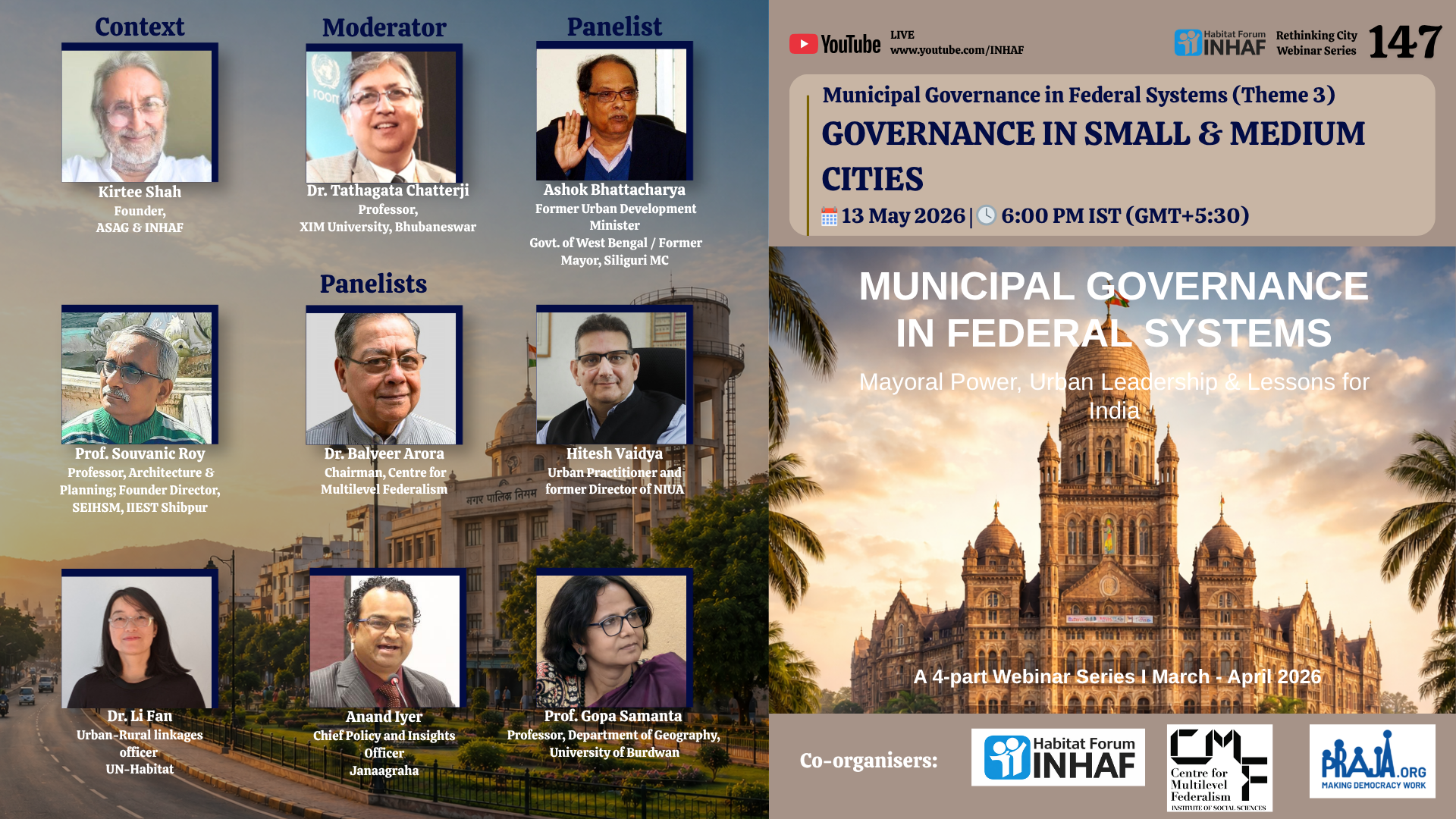
Speakers
-
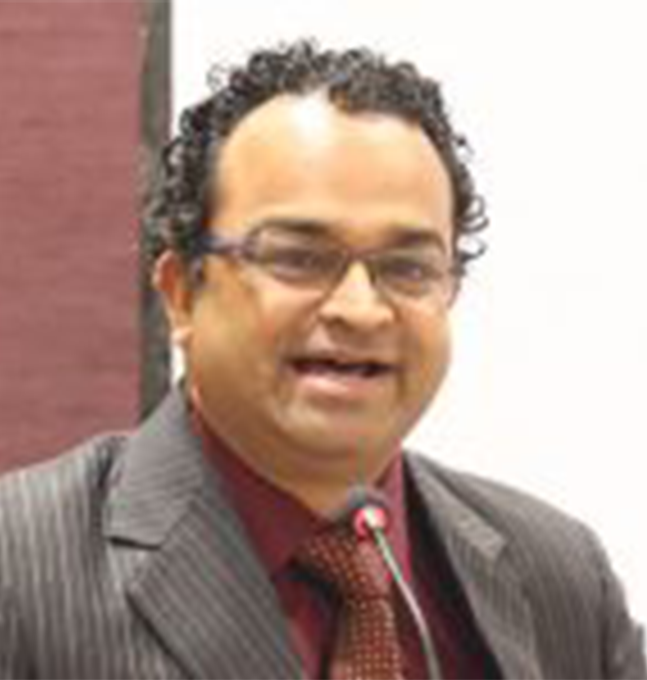 Anand IyerChief Policy and Insights Officer, Janaagraha
Anand is an architect with over 22 years of experience spanning government, private sector, consulting, academia, and professional practice in urban development, land, infrastructure, and design. At Janaagraha, he leads policy work in urban governance, climate, health, and equity. He has previously held senior roles at the National Institute of Urban Affairs, Aspen Infrastructures, and Vastu Shilpa Foundation. His core focus areas are urban governance, land and building development, and climate action.
-
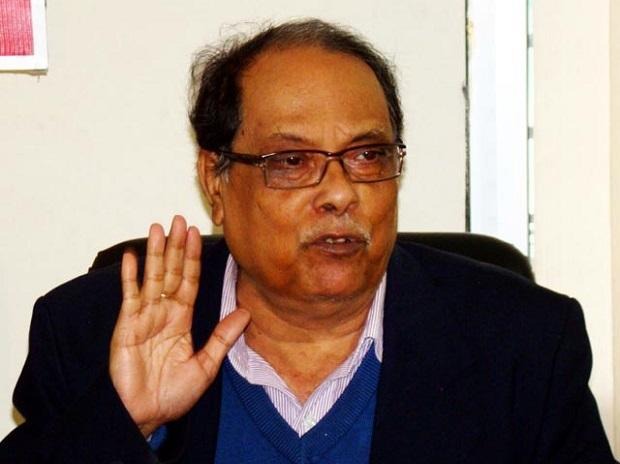 Ashok BhattacharyaFormer Urban Development Minister, Govt. of West Bengal / Former Mayor, Siliguri MC
Ashok Bhattacharya started his political career as a corporator in Siliguri Municipal Corporation. He became the chairman of Siliguri municipality in 1987 and remained as the chairman till 1991. He was elected to the West Bengal Legislative Assembly from Siliguri (Vidhan Sabha constituency) as a CPI(M) candidate for the first time in 1991. He is a five-time MLA of West Bengal Legislative Assembly from Siliguri. He won elections from Siliguri in 1991, 1996, 2001, 2006 and 2016. In 1996, he became the Minister for Urban Development and Municipal Affairs in the Left Front Government in West Bengal under chief minister Jyoti Basu. He also continued as cabinet minister under chief minister Buddhadeb Bhattacharjee till 2011 when the Left Front Government lost the power to All India Trinamool Congress (AITC). in 2011 West Bengal Legislative Assembly election, he was defeated by AITC candidate Rudra Nath Bhattacharya in Siliguri. But he won from Siliguri again in 2016 West Bengal Legislative Assembly election against AITC candidate and former captain of Indian National Football Team Bhaichung Bhutia.
In May 2015, Ashok Bhattacharya became the Mayor of Siliguri Municipal Corporation after the Left Front won the municipal election in Siliguri. -
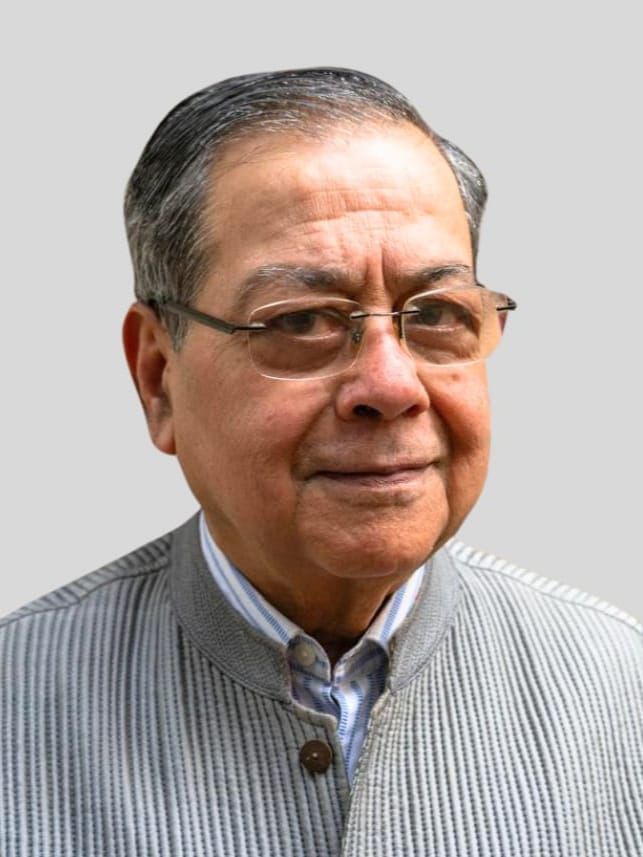 Dr. Balveer AroraChairman, Centre for Multilevel Federalism
Dr. Balveer Arora is Professor Emeritus and Founder Chairman of the Institute of Social Sciences’ Centre for Multilevel Federalism, New Delhi. He was earlier Professor of Political Science at Jawaharlal Nehru University (1973–2010), and also served as Rector and Pro-Vice Chancellor of JNU (2002–2005). He is Vice President of the Institut International Transcultura, Paris.
Professor Arora completed his Master’s and Doctorate in Political Science from Sciences Po Paris, at the University of Paris I (1972), after his Bachelor’s degree from St. Stephen’s College, University of Delhi (1964). He is a recipient of France’s highest civilian honour, Knight of the Legion of Honour, and is also an Officer in the French Order of Academic Laurels.
His current work focuses on Indian politics and international relations, particularly India–Europe relations in the contemporary world. He has written extensively on India’s federal democracy and its institutions. Dr. Arora is Chairman of the Board of Governors of the Centre for the Study of Developing Societies (CSDS, 2025–) and President Emeritus of the NGO Water for People India Trust.
-
 Dr. Li FanUrban-Rural linkages officer, UN-Habitat
Dr. Li Fan is an urban-rural linkages officer at UN-Habitat. She holds a degree in Urban Planning from Tongji University and received her Ph.D. from the Technical University of Berlin. Dr. Fan has extensive experience as a consultant on urban development and regeneration projects, collaborating with both national and international institutions. She is a German Chancellor Fellow and a DAAD fellow. She has served on the board of the International Association of World Heritage Professionals (2021-2023) and is currently the vice-chair of the ISOCARP Scientific Committee (2023-2025).
-
 Dr. Tathagata ChatterjiProfessor, Xavier University, Bhubaneswar
Dr. Tathagata Chatterji is a Professor of Urban Management and Governance at XIM University, Bhubaneswar, where he concurrently teaches at both the School of Human Settlements and the School of Governance and Public Affairs. Broadly within the area of urban governance, his research interests include urban policies and institutions; digital technology applications in urban management; climate governance and social inclusion; and urban economy and informal livelihoods. A recipient of the Gerd Albers Award (2016) from ISOCARP (International Society of City and Regional Planners), Dr. Chatterji has written extensively on urban policy and governance in an international context. Presently, he is co-editing a book, City Economies in the Global South: Growth, Inclusion, and Sustainability, to be published by Routledge. He holds a PhD in Urban Planning and Governance from the University of Queensland, Australia.
-
 Hitesh VaidyaUrban Practitioner and former Director of NIUA
Hitesh Vaidya is a distinguished urban development practitioner with over 25 years of experience in policy design, project formulation, and large-scale program management. He has worked extensively with global development institutions including the United Nations, World Bank, and USAID, contributing to transformative initiatives in urban governance, infrastructure management, and inclusive poverty alleviation.
Prior to joining the National Institute of Urban Affairs, he served as Country Representative of UN-Habitat India, where he played a pivotal role in shaping the ecosystem for the design and rollout of India’s flagship urban missions. Renowned for his strategic leadership, he excels in building robust institutional frameworks and driving effective project implementation through strong coordination among governments, multilateral agencies, and diverse stakeholders.
-
 Prof. Gopa SamantaProfessor, Department of Geography, University of Burdwan
Gopa Samanta works as Professor at the Department of Geography, The University of Burdwan. Her research interests cut across the fields of Urban, Gender and Water. She is an engaged scholar in urban studies over more than three decades with a special emphasis on small towns in India. She specifically looks at the functions and governance of small towns. She is the author of four academically acclaimed books. She worked as visiting professor at Paris Sorbonne University and as visiting fellow at Australian National University and at Paris Diderot University. She is a member of the editorial board of the Review of Urban Affairs, Economic and Political Weekly.
-
 Prof. Souvanic RoyFounder Director, SEIHSM, IIEST, Shibpur
Dr. Souvanic Roy is Professor in the Department of Architecture and Planning and Founder Director of the School of Ecology, Infrastructure and Human Settlement Management at the Indian Institute of Engineering Science and Technology (IIEST), Shibpur, India. He is engaged in teaching, research, and advocacy in the areas of urban and environmental planning, conservation, climate change adaptation, and socio-ecological resilience in critical ecosystems.
He has coordinated a number of research and consultancy projects funded by national and international agencies and has published articles in books and international journals. He was Co-Investigator of the GCRF Living Deltas Research Hub led by Newcastle University, UK, supported by UKRI, and a member of the GCRF Equitable Resilience Commissioning Panel.
He is a recipient of the Ford Asia Fellowship by the Asian Scholarship Foundation (ASF), Bangkok, and the Indo-Canadian Fellowship by the Shastri Indo-Canadian Institute (SICI) for research excellence in socio-ecological resilience. He is a member of the Governing Council of India Habitat Forum (INHAF), Pune, and an empanelled expert for Urban Missions in the Ministry of Housing and Urban Affairs, Government of India. Prof. Roy is also a Co-Investigator of the international collaborative project on “Brownfield Regeneration of Jute Mills Land in Kolkata” with the Department of Urban Studies and Planning, MIT, USA.
Local Time
- Timezone: America/New_York
- Date: May 13 2026
- Time: 8:30 am - 10:30 am
Municipal Governance in Federal Systems (Theme 3): Governance in Small & Medium Cities
Cities in federal systems operate within complex institutional arrangements, balancing authority, resources, and accountability across multiple levels of government. As urbanisation accelerates, metropolitan regions are emerging as key drivers of economic growth while simultaneously facing challenges of infrastructure stress, spatial expansion, inequality, and climate risks. Globally, debates on urban governance have increasingly focused on leadership structures, coordination mechanisms, and institutional design.
In India, despite the vision of decentralised governance under the 74th Constitutional Amendment, urban local bodies often face limited autonomy, weak fiscal capacity, and fragmented governance structures. Recent developments—such as reforms in metropolitan governance and evolving city-regional approaches—have renewed attention on how cities can be governed more effectively within a federal framework.
Objectives of the Webinar Series
This webinar series seeks to:
- Understand how different governance structures (single-tier vs multi-tier) shape urban management
- Compare leadership models, including executive mayors and commissioner-led systems
- Examine challenges faced by cities, particularly in service delivery and coordination
- Analyse fiscal systems, including intergovernmental transfers and urban financing mechanisms
Theme III – Governance in Small & Medium Cities
Small and medium-sized cities are emerging as key drivers of urban growth, economic transformation, and regional development across India and the Global South. In India, Tier II and Tier III cities are expected to absorb a significant share of future urbanisation, supported by policy initiatives such as IDSMT, UIDSSMT, AMRUT, and the Urban Challenge Fund.
Despite their growing importance, these cities often face challenges including weak institutional capacity, limited fiscal resources, staffing shortages, and fragmented governance systems. This webinar will explore how governance frameworks, intergovernmental coordination, fiscal support, and local leadership can strengthen urban management and support resilient, inclusive, and sustainable urban development beyond metropolitan regions.