Raghu Rai (1942–2026)
The Eye That Helped India See Itself
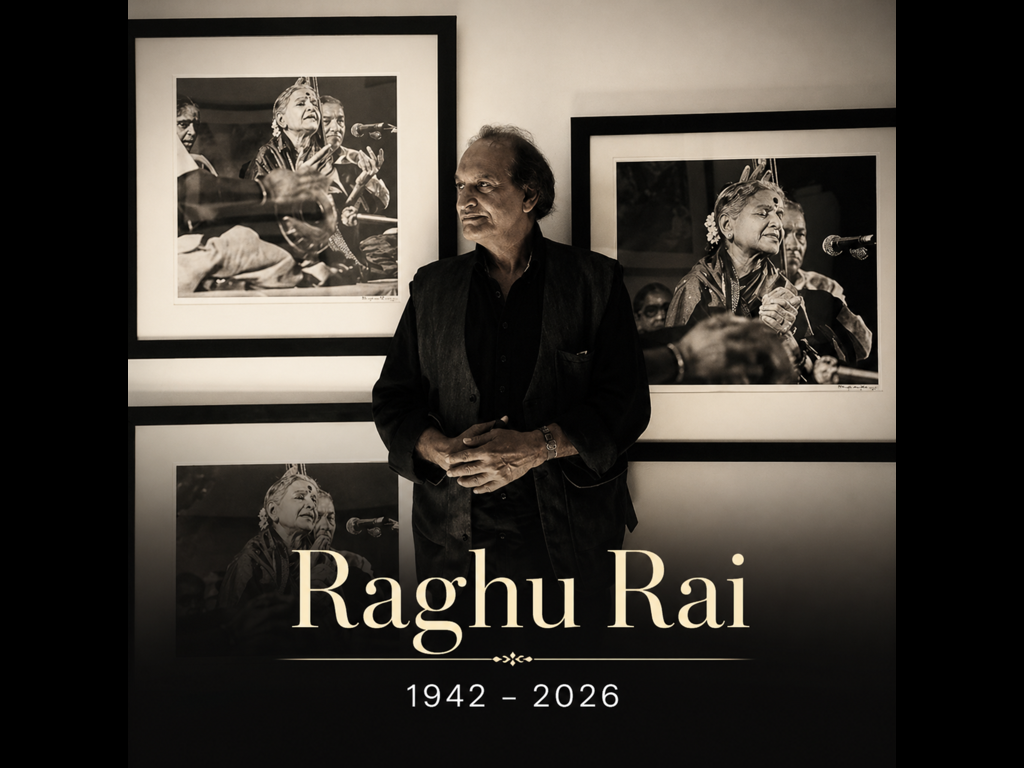
There are photographers who document the world, and then there are those who transform how a nation understands itself. Shri Raghu Rai belonged to the latter.
For over five decades, he turned his lens toward India not as spectacle or abstraction, but as lived experience. His photographs went beyond capturing moments they revealed deeper truths. In the everyday rhythms of streets, in the quiet dignity of workers, and in the layered chaos and poetry of cities, he uncovered something enduring: the human condition in all its vulnerability and resilience. Through his work, India did not simply see itself it began to understand itself.
This profound way of seeing shaped his engagement with Habitat Forum (INHAF). At a time when INHAF was expanding conversations on urban futures through its Rethinking Cities webinar initiative, it became clear that analysis alone could not fully express the life of cities. Data could inform and policy could guide, but neither could capture the texture of lived realities. For that, a different language was needed one that could speak where words fell short.
This need became especially significant in the context of INHAF’s forthcoming book City Economies in the Global South: Growth, Inclusion and Sustainability, to be published by Routledge. As a major international publication, the book demanded a visual narrative equal to its intellectual ambition. It required images curated with depth, credibility, and integrity mirroring the rigor of its scholarship and calling for a photographer of exceptional stature.
Shri Raghu Rai was the natural choice.
When invited to guide the visual dimension of the book, he approached the role not as a peripheral contribution but as central to its purpose. Serving as the sole jury for the photography competition, he brought not only his stature but also a deep sense of responsibility.
Despite his many commitments, he engaged with each submission with remarkable care. Every photograph was not just viewed but thoughtfully examined for meaning, depth, and its ability to reflect the lived realities of urban economies. The seven images he selected now featured across the book were not chosen for aesthetics alone, but for their ability to carry something more profound: the pulse of life, struggle, and humanity within the city.
Those who worked with him experienced a quiet generosity. There was no distance or grandiosity only attentiveness, humility, and a genuine willingness to share his time and insight. With Mrs. Gurmeet Rai’s steady facilitation, the collaboration unfolded seamlessly, guided by mutual respect and a shared vision.
What emerged was more than a collection of photographs. It became a visual narrative that strengthened the book’s central argument that cities must be understood not only through economies and infrastructure, but through the people who inhabit, shape, and sustain them.
In many ways, this was Shri Raghu Rai’s lifelong message.
He reminded us that looking is not the same as seeing. That behind every statistic lies a human story. That the true measure of a city or a nation is found not in its skylines, but in the faces of its people.
As we remember him, we do not just honour a master photographer. We carry forward a way of seeing patient, humane, and unflinchingly honest. A way of seeing that continues to challenge us to look closer, feel deeper, and never lose sight of the human within the frame.
Explore more:
Brochures, shortlisted photographs, and related media can be accessed here: https://drive.google.com/drive/folders/1KLMRABvc4kOq0h14e3K4XNoWiFKu7U5A?usp=sharing
share this POST: